Knife guide · 4 min read
Brisket Knife Guide: The Best Knife for Slicing Brisket
The best brisket knife is a long, narrow slicer. Here is what to look for, how to slice brisket against the grain, and how to keep the edge.
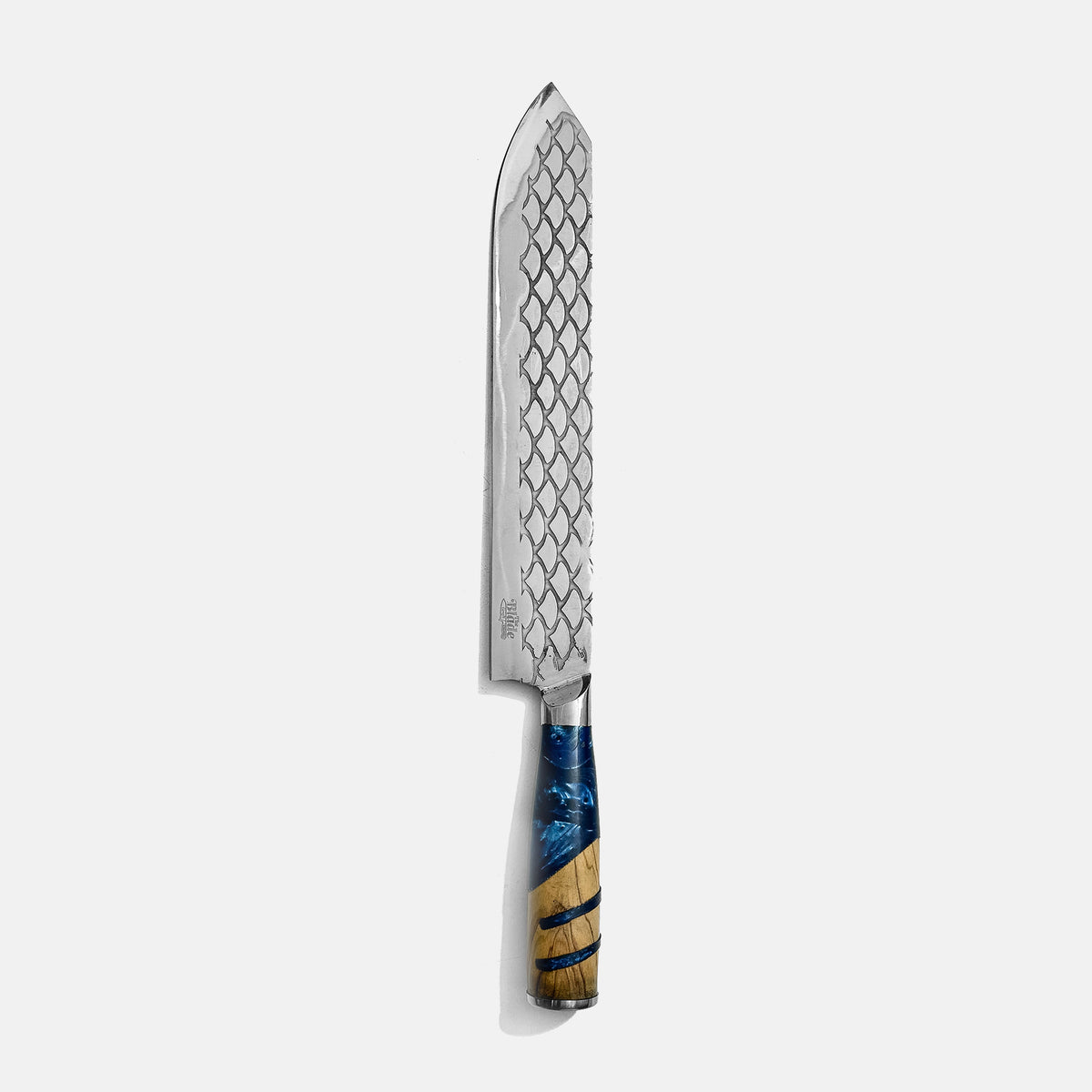
The best knife for slicing brisket is a long, narrow slicing knife with a blade of about 11 to 14 inches. The length lets you cut across the whole brisket in one smooth stroke, which keeps each slice intact and the bark in place, and a narrow blade with a textured or scalloped surface stops the meat clinging to it.

What is a brisket knife?
A brisket knife is a slicing knife made for large cuts of cooked meat. It is longer and narrower than a chef knife, often with a rounded tip, and it is used with long, light strokes instead of pressure. You spend twelve hours smoking a brisket; the knife is what decides whether it reaches the plate in neat slices or in shreds.
What to look for in a brisket knife
- Length: 11 to 14 inches. The blade should be longer than the brisket is wide. A 12 inch blade covers most home briskets; go longer for whole packer briskets.
- A narrow blade. Less steel in contact with the meat means less drag and cleaner slices.
- A textured or scalloped surface. Hollows, a hammered finish or a patterned blade let air in between the steel and the meat, so slices fall away instead of sticking.
- A plain edge. A sharp straight edge leaves a smoother cut than serrations, which can tear soft, rendered brisket.
- A full tang and a secure handle. Your hands will be greasy; grip and balance matter.
Our brisket knives
- BladeWave 12-inch Damascus slicer: a fish-scale textured blade that lowers drag, on a blue resin and wood handle.
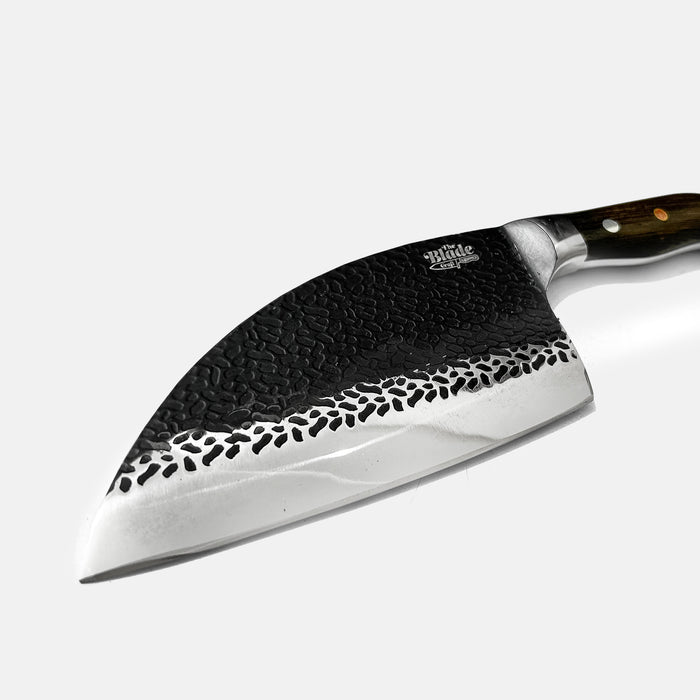
- SharpCraft 12-inch Damascus slicer: a hammered finish along the blade to help slices release, on a dark wood handle.
- For roasts and smaller joints, a 9 to 10 inch slicer is easier to handle. See all slicing and carving knives.
How to slice brisket
1. Rest it
Let the brisket rest, wrapped, for at least an hour before slicing. Cutting it straight off the smoker lets the juices run out onto the board.
2. Find the grain
Look for the lines of muscle fibre running along the meat. You want to cut across those lines, not along them. Cutting with the grain leaves long, chewy fibres in every slice.
3. Separate the point and the flat
A whole brisket is two muscles, the lean flat and the fattier point, and their grains run in different directions. Find the layer of fat between them and cut along it to separate the two, then slice each one against its own grain.
4. Slice the flat
Cut slices about the thickness of a pencil. Start the stroke at the heel of the knife and draw it back through the meat in one long motion, letting the length of the blade do the work. Press lightly or not at all.
5. Slice the point
Turn the point so you cut across its grain. Slice it a little thicker, or cube it for burnt ends.
Brisket knife vs carving knife
A carving knife is shorter, usually around 8 inches, stiffer and pointed, which suits working around the bones of a roast or a bird. A brisket knife is longer and narrower for boneless meat. If you mostly cook brisket, pork shoulder and large roasts, choose the slicer.
Keeping the edge
Hone the knife before each cook, wash and dry it by hand straight after slicing, and store it in a guard or on a magnetic strip so the long edge is protected. Sharpen on a whetstone when honing no longer brings the edge back; see how to sharpen a knife with a whetstone.
Frequently asked questions
What size knife is best for brisket?
Around 12 inches suits most briskets. Choose 14 inches for a whole packer brisket.
Should a brisket knife be serrated?
A sharp plain edge gives cleaner slices. Serrations grip a crusty bark but can tear tender meat.
Can I slice brisket with a chef knife?
You can, but an 8 inch blade needs several sawing strokes across a wide brisket, which tears the slices and pulls off the bark.
How thick should brisket be sliced?
About the thickness of a pencil for the flat, slightly thicker for the point.
Hand-forged in 224 layers
Find the right knife for the job
Every Blade Craft knife is forged by hand from Damascus steel, finished with a full-tang handle and covered by our lifetime guarantee.