-
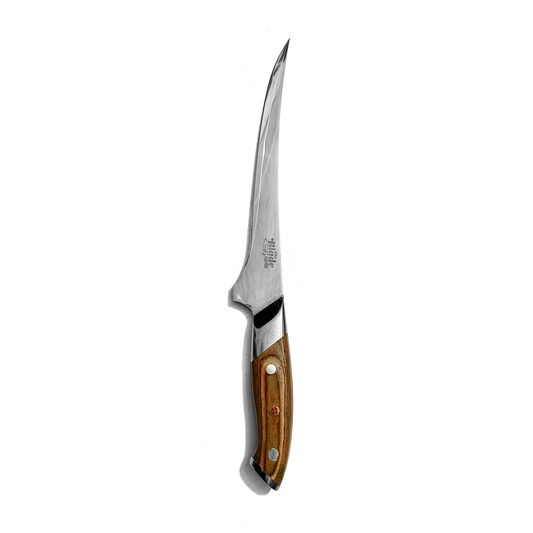
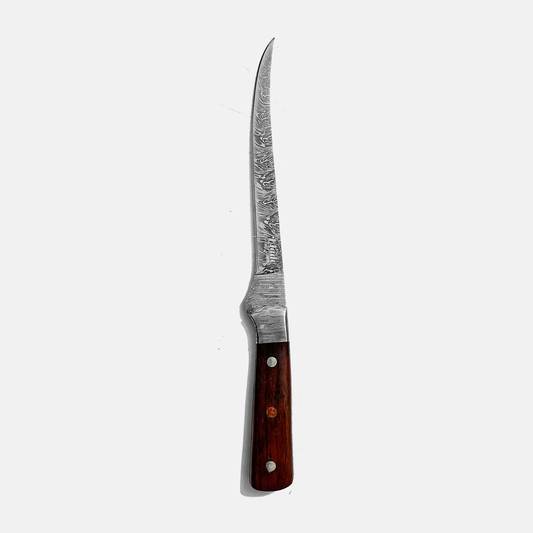
RazorCurve Damascus Boning Knife
Prix habituel £85.00 GBPPrix habituel -
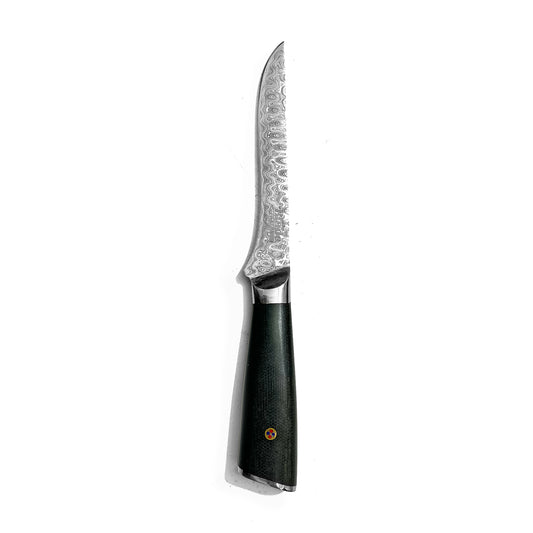
TitanForge Damascus Boning Knife
Prix habituel £84.00 GBPPrix habituel -
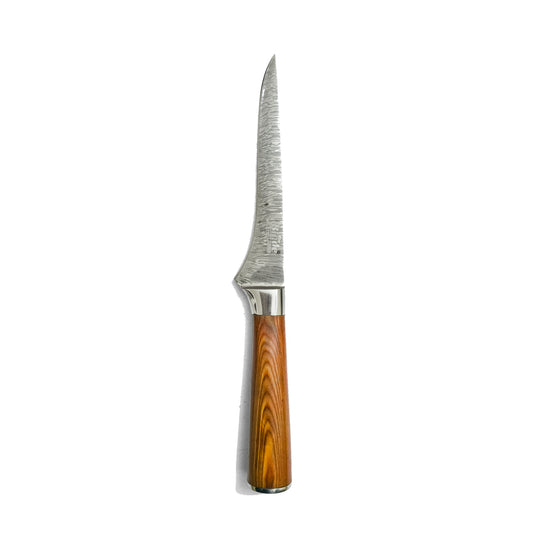
PrimeCut 6.5" Damascus Flex Boning Knife
Prix habituel £79.00 GBPPrix habituel -
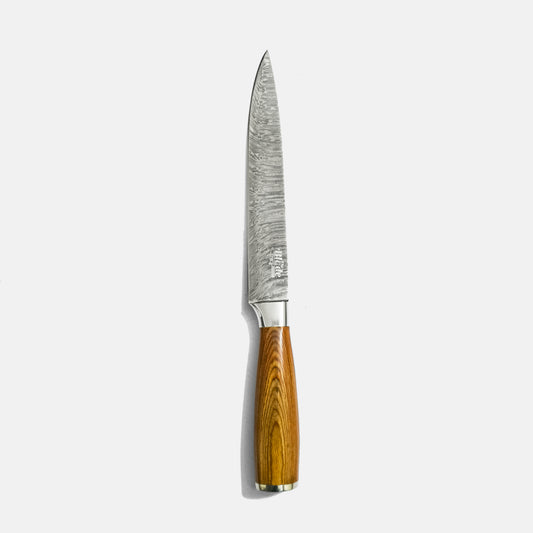
PrimeCut 8" Damascus Carving Knife
Prix habituel £83.00 GBPPrix habituel -
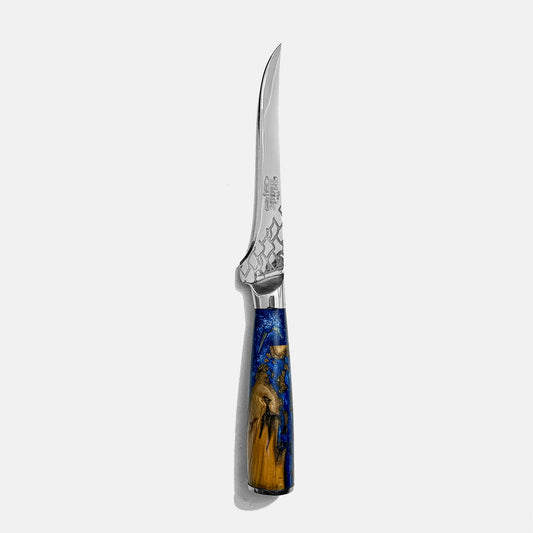
SteelPulse 7.5" Damascus Boning Knife
Prix habituel £85.00 GBPPrix habituel -
BladeWave Damascus Boning Knife
Prix habituel £72.00 GBPPrix habituel






The boning knife guide
What is a boning knife?
A boning knife has a narrow blade with a sharp point, made to separate meat from bone. The slim profile turns easily around joints and follows the line of a bone closely, so less meat is left behind. It is also the knife for trimming fat and removing silverskin.
Stiff or flexible?
- Stiff blades give control and power on beef, lamb and pork. See the 7.5" SteelPulse boning knife and the TitanForge.
- Flexible blades bend along the bone and under skin, which suits poultry and fish. See the 6.5" PrimeCut flex boning knife.
- Curved blades such as the RazorCurve make long, sweeping trimming cuts easier.
Boning knife vs fillet knife
A fillet knife is longer, thinner and very flexible, made for fish. A boning knife is slightly thicker and comes stiff or flexible. A flexible boning knife will fillet most fish well, so one knife can do both jobs at home. For slicing the cooked joint, use a carving or slicing knife.
Damascus boning knife FAQs
What is a boning knife used for?
Removing bones from meat, poultry and fish, jointing a chicken, trimming fat and removing silverskin.
Should a boning knife be flexible or stiff?
Choose stiff for beef, lamb and pork, where you need to push through tougher meat. Choose flexible for poultry and fish, where the blade needs to follow the bone closely.
What is the difference between a boning knife and a fillet knife?
A fillet knife is longer, thinner and more flexible, and is made for fish. A boning knife is a little thicker and is made mainly for meat and poultry. A flexible boning knife can do both.
What size boning knife is best?
Between 5.5 and 7.5 inches. Around 6 inches is the most versatile for home use. A longer blade helps with larger joints.
Can a boning knife cut through bone?
No. It cuts around bones and through joints, not through the bone itself. Use a cleaver for small bones.