-
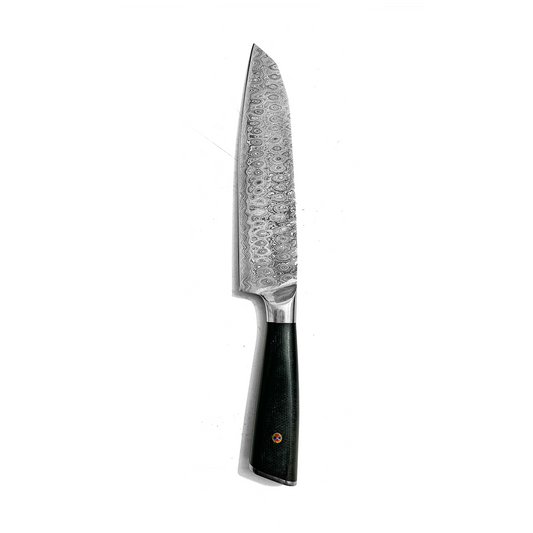
TitanForge 7" Damascus Santoku Knife
Prix habituel £98.00 GBPPrix habituel -
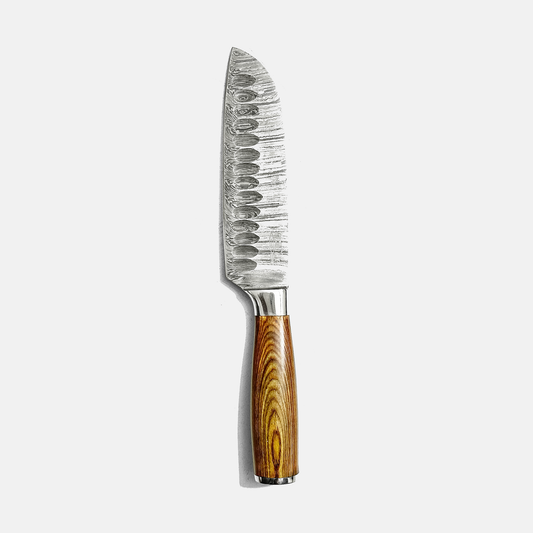
PrimeCut 6.7" Damascus Santoku Knife
Prix habituel £97.00 GBPPrix habituel -
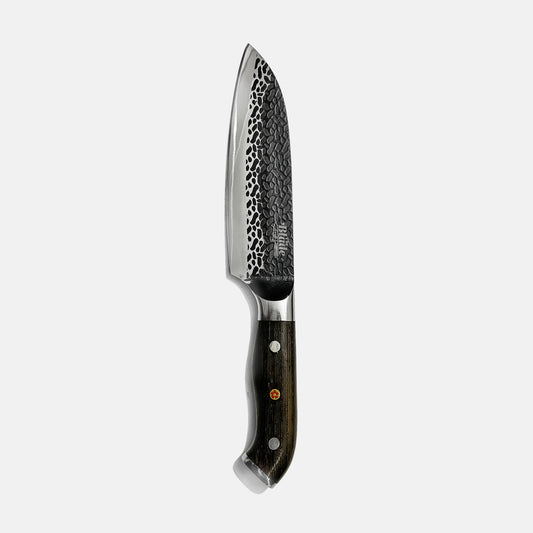
SharpCraft Damascus Santoku Knife
Prix habituel £87.00 GBPPrix habituel£0.00 GBPPrix promotionnel £87.00 GBP -
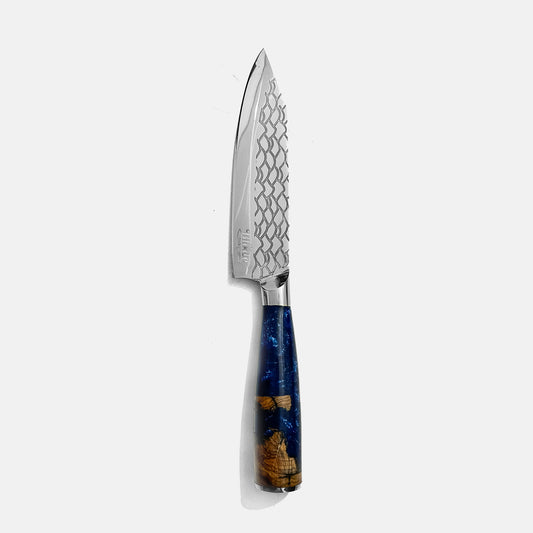
BladeWave 6" Damascus Mini Chef Knife
Prix habituel £78.00 GBPPrix habituel




The santoku guide
What is a santoku knife?
The santoku is Japan's all-purpose kitchen knife. The name means "three virtues", usually read as slicing, dicing and mincing. Compared with a Western chef knife it is shorter, with a flatter edge and a rounded tip that curves down to meet the edge. That shape suits a straight up-and-down or push-forward cut rather than a rocking motion.
Santoku vs chef knife
Pick a santoku if you chop mostly vegetables, like a lighter knife, or have a small chopping board. Pick a chef knife if you rock the blade through herbs, break down larger cuts of meat, or want the extra reach of an 8-inch blade. Many cooks keep both. We compare them in more detail on our blog.
Which Damascus santoku should I buy?
- Full-size: the 7" TitanForge santoku with a black handle.
- Classic wood handle: the 6.7" PrimeCut santoku.
- Hammered finish: the SharpCraft santoku, whose textured blade helps food release.
- Compact: the 6" BladeWave mini chef knife, for small hands and small boards.
All four are forged from 224 layers of Damascus steel with a full tang.
Damascus santoku FAQs
What is a santoku knife used for?
Slicing, dicing and mincing vegetables, boneless meat and fish. It is a general-purpose knife, so it can be the main knife in a home kitchen. It is not designed for bones or frozen food.
What is the difference between a santoku and a chef knife?
A santoku is shorter and lighter, with a flatter edge and a rounded tip, and is used with a straight chopping motion. A chef knife is longer, with a curved edge made for rocking and a pointed tip for detail work.
What is the difference between a santoku and a nakiri?
A nakiri has a completely flat, rectangular blade made only for vegetables. A santoku has a slight curve and a tip, so it also handles meat and fish. If you want one knife, choose the santoku.
What size santoku is best?
A 7-inch (18 cm) santoku suits most adults. Go down to around 6 inches if you have smaller hands or a small board.
Can you rock a santoku knife?
Only a little. The edge is flatter than a chef knife, so a push cut or straight chop works better and gives cleaner slices.