Knife guide · 4 min read
Types of Kitchen Knives and What Each One Is Used For
A plain guide to the main types of kitchen knives, what each one does, and which ones a home cook really needs.
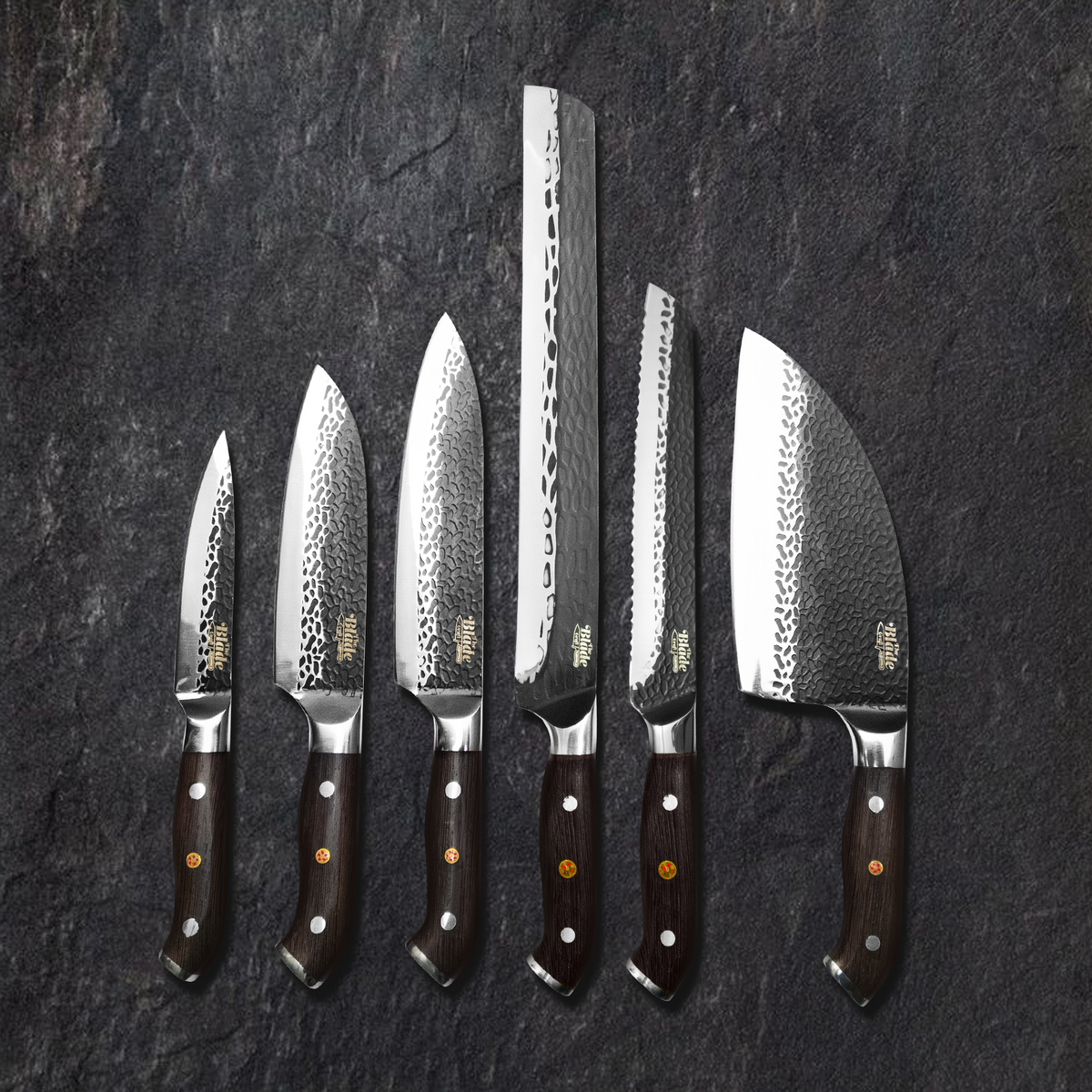
There are nine main types of kitchen knives: the chef knife, santoku, paring knife, utility knife, bread knife, carving or slicing knife, boning knife, nakiri and cleaver. Most home cooks need only three of them. This guide explains what each one is for, so you can buy the knives you will use and skip the rest.
Kitchen knives at a glance
| Knife | Typical blade | Best for |
|---|---|---|
| Chef knife | 8 in (20 cm) | Almost everything: chopping, slicing, dicing |
| Santoku | 6 to 7 in | Vegetables, boneless meat and fish |
| Paring knife | 3 to 4 in | Peeling, trimming, small precise cuts |
| Utility knife | 4 to 6 in | Small board jobs: tomatoes, sandwiches, cheese |
| Bread knife | 8 in, serrated | Crusty bread, cakes, tomatoes |
| Carving or slicing knife | 8 to 12 in | Roasts, brisket, ham, smoked salmon |
| Boning knife | 5 to 7 in, narrow | Removing meat from the bone, trimming |
| Nakiri | 6 to 7 in, flat edge | Vegetables only |
| Cleaver | 6 to 8 in, tall and heavy | Small bones, joints, hard squash |
1. Chef knife
The chef knife is the one knife every kitchen needs. Its curved edge rocks through herbs and onions, the pointed tip handles detail, and the weight near the handle deals with harder vegetables. An 8-inch blade suits most people. If you buy one good knife, make it this one. See our Damascus chef knives.
2. Santoku
The santoku is the Japanese all-purpose knife. It is shorter and lighter than a chef knife, with a flatter edge and a rounded tip, and it is used with a straight chop or a push cut. Many cooks prefer it for vegetables and for smaller chopping boards. See santoku knives, or read what a santoku is used for.
3. Paring knife
A small knife for work done in the hand: peeling fruit, hulling strawberries, deveining prawns and trimming fat. It is the second knife most cooks reach for. See paring knives.
4. Utility knife
The in-between knife, sometimes called a petty knife. It is longer than a paring knife and shorter than a chef knife, and it suits small jobs on the board such as slicing tomatoes, cutting sandwiches and preparing shallots. See utility knives.
5. Bread knife
A long serrated blade that saws through a hard crust without crushing the soft crumb. It is also the best knife for cakes, pastry and ripe tomatoes. No plain-edged knife does this job as well. See bread knives.
6. Carving and slicing knives
Long, narrow blades that cut cooked meat in one smooth stroke, so each slice stays whole. A carving knife is a little shorter with a pointed tip for working around bone. A slicer is longer, for brisket, ham and whole sides of fish. See slicing and carving knives.
7. Boning knife
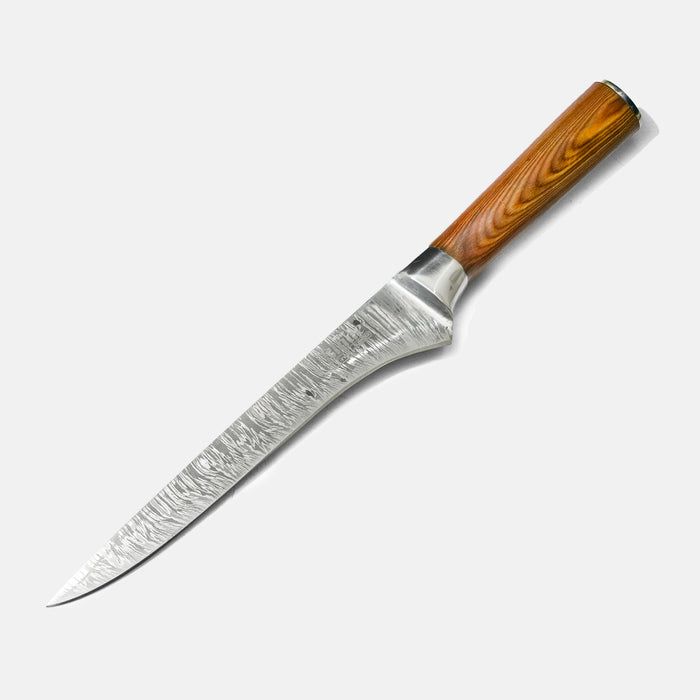
A narrow, pointed blade for separating meat from bone and working around joints. Stiff blades suit beef, lamb and pork. Flexible blades suit poultry and fish. See boning knives.
8. Nakiri
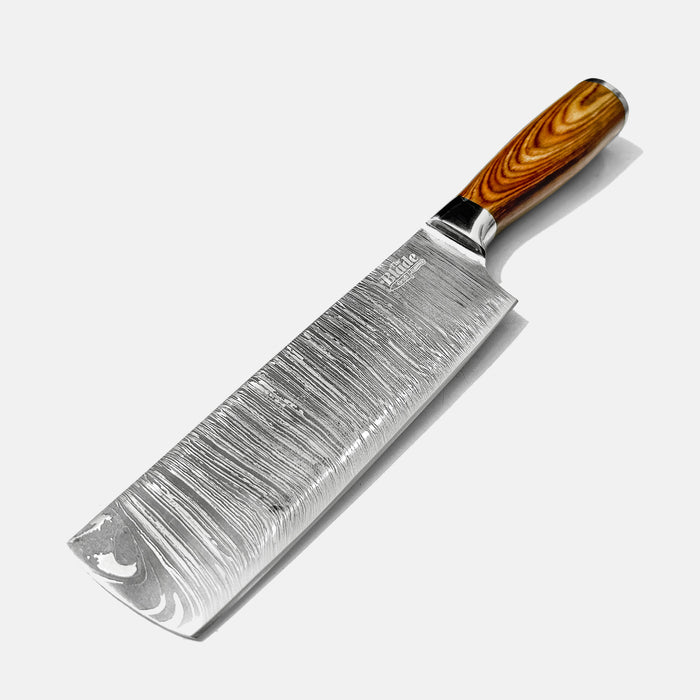
A Japanese vegetable knife with a rectangular blade and a completely flat edge. Because the whole edge meets the board at once, it cuts cleanly through in a single stroke. It is a specialist: excellent for vegetables and not meant for meat on the bone. See the nakiri knife.
9. Cleaver
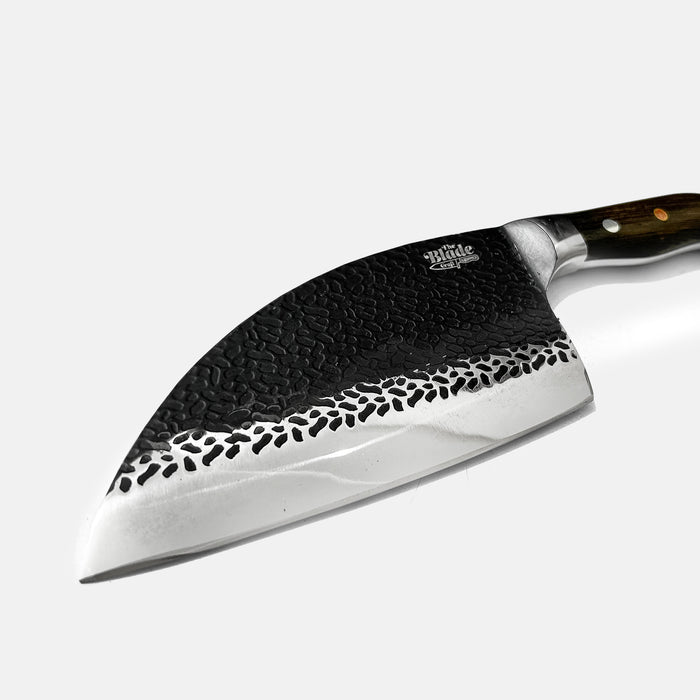
The heavy knife of the kitchen. Its tall, thick blade chops by weight, which makes it the right tool for poultry joints, ribs, small bones and hard squash. See cleavers.
Which kitchen knives do you really need?
- The essential three: a chef knife (or santoku), a paring knife and a bread knife. These cover most home cooking.
- If you cook roasts or barbecue: add a carving or slicing knife.
- If you joint your own meat or fish: add a boning knife, and a cleaver for bones.
- If you cook mostly vegetables: add a nakiri.
You can buy these one at a time, or as a matched knife set.
What to look for in any kitchen knife
- Good steel, properly hardened. This decides how sharp the knife gets and how long it stays sharp.
- A full tang. The steel should run through the whole handle for strength and balance.
- A handle that fits your hand. Comfort matters more than looks over a long prep session.
- Balance. Held in a pinch grip just in front of the handle, the knife should feel neither blade-heavy nor handle-heavy.
Frequently asked questions
What are the three most important kitchen knives?
A chef knife, a paring knife and a serrated bread knife.
What is the most versatile kitchen knife?
The chef knife. A santoku is a close second and suits cooks who prefer a lighter, shorter blade.
What is the difference between a chef knife and a santoku?
A chef knife is longer with a curved edge for rocking. A santoku is shorter with a flatter edge for chopping straight down. We compare them in Chef Knife vs Santoku.
Do I need a full knife set?
No. Three good knives are better than ten poor ones. Buy a set only if you will use most of the knives in it.
All of our knives are hand-forged from 224 layers of Damascus steel. Browse the full range.
Hand-forged in 224 layers
Find the right knife for the job
Every Blade Craft knife is forged by hand from Damascus steel, finished with a full-tang handle and covered by our lifetime guarantee.