Knife guide · 3 min read
What Is a Boning Knife Used For? (Plus Boning vs Fillet Knife)
A boning knife separates meat from bone and trims fat and silverskin. Here is what it does, stiff vs flexible blades, and boning vs fillet knife.
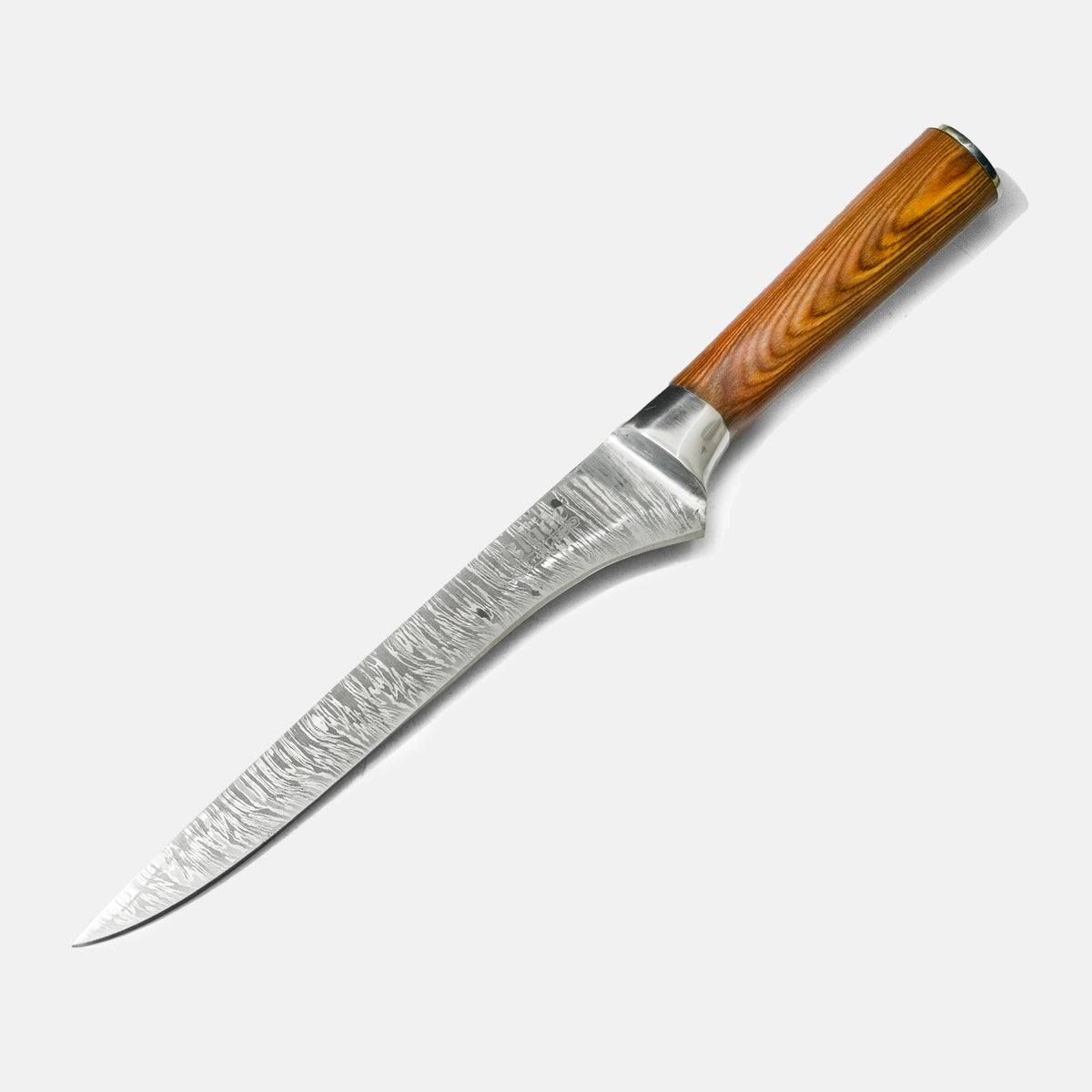
A boning knife is used to separate meat from bone. Its narrow, pointed blade slips between meat and bone and turns easily around joints, so you waste less meat. It is also the best knife for trimming fat, removing silverskin and jointing a chicken.

What is a boning knife?
A boning knife has a thin, narrow blade, usually 5 to 7 inches long, with a sharp point. It is much slimmer than a chef knife, which lets it follow the shape of a bone closely instead of cutting through the meat around it.
What a boning knife is used for
- Deboning chicken thighs, legs and breasts.
- Jointing a whole chicken by finding and cutting through the joints.
- Removing bones from pork shoulder, lamb leg and beef joints.
- Trimming fat and preparing brisket and roasts.
- Removing silverskin, the tough membrane on tenderloin and ribs.
- Butterflying a leg of lamb or a pork loin.
- Filleting fish, with a flexible blade.
Stiff or flexible?
| Stiff blade | Flexible blade | |
|---|---|---|
| Best for | Beef, lamb, pork | Poultry and fish |
| Why | Pushes through dense meat with control | Bends along the bone and under skin |
| Our knives | SteelPulse 7.5", TitanForge | PrimeCut 6.5" flex |
If you mainly cook chicken and fish, choose flexible. If you buy larger joints of red meat, choose stiff. A curved blade, such as our RazorCurve boning knife, makes long trimming cuts easier.
Boning knife vs fillet knife
| Boning knife | Fillet knife | |
|---|---|---|
| Blade | Narrow, slightly thicker, stiff or flexible | Longer, thinner and very flexible |
| Made for | Meat and poultry | Fish |
| Typical length | 5 to 7 in | 6 to 9 in |
A flexible boning knife will fillet most fish well, so one knife can do both jobs in a home kitchen. A dedicated fillet knife is worth having only if you prepare whole fish often.
How to use a boning knife
- Hold it firmly with your fingers wrapped around the handle and your index finger along the spine for control.
- Find the bone with your other hand first, so you know which way it runs.
- Keep the blade against the bone and use the tip in short strokes, peeling the meat back as you go.
- Cut through joints, not bones. Bend the joint to open it, then cut through the cartilage.
- Cut away from yourself and keep your guiding hand behind the blade.
What not to use a boning knife for
It is not for chopping through bone or for frozen meat; the thin blade can chip or bend. Use a cleaver for bones. For slicing the cooked joint, use a slicing or carving knife.
Care
Wash and dry by hand straight after working with raw meat, hone it before each session and sharpen on a whetstone when it starts to slip on skin or sinew. See all our Damascus boning knives.
Frequently asked questions
What does a boning knife look like?
A long, narrow blade with a sharp point, much slimmer than a chef knife. Some curve upwards towards the tip.
What size boning knife is best?
Around 6 inches is the most versatile for home use. Go longer for big joints of beef or pork.
Can a boning knife cut through bone?
No. It cuts around bones and through joints. Use a cleaver for small bones.
Do I need a boning knife if I have a chef knife?
If you joint chickens or buy whole cuts of meat, yes. It is faster, wastes less meat and is safer than forcing a wide chef knife around bones.
Hand-forged in 224 layers
Find the right knife for the job
Every Blade Craft knife is forged by hand from Damascus steel, finished with a full-tang handle and covered by our lifetime guarantee.