Knife guide · 4 min read
What Is a Paring Knife Used For? 12 Jobs It Does Best
A paring knife is the small knife for precise work. Here are twelve jobs it does best, how to hold it, and how it differs from a utility knife.
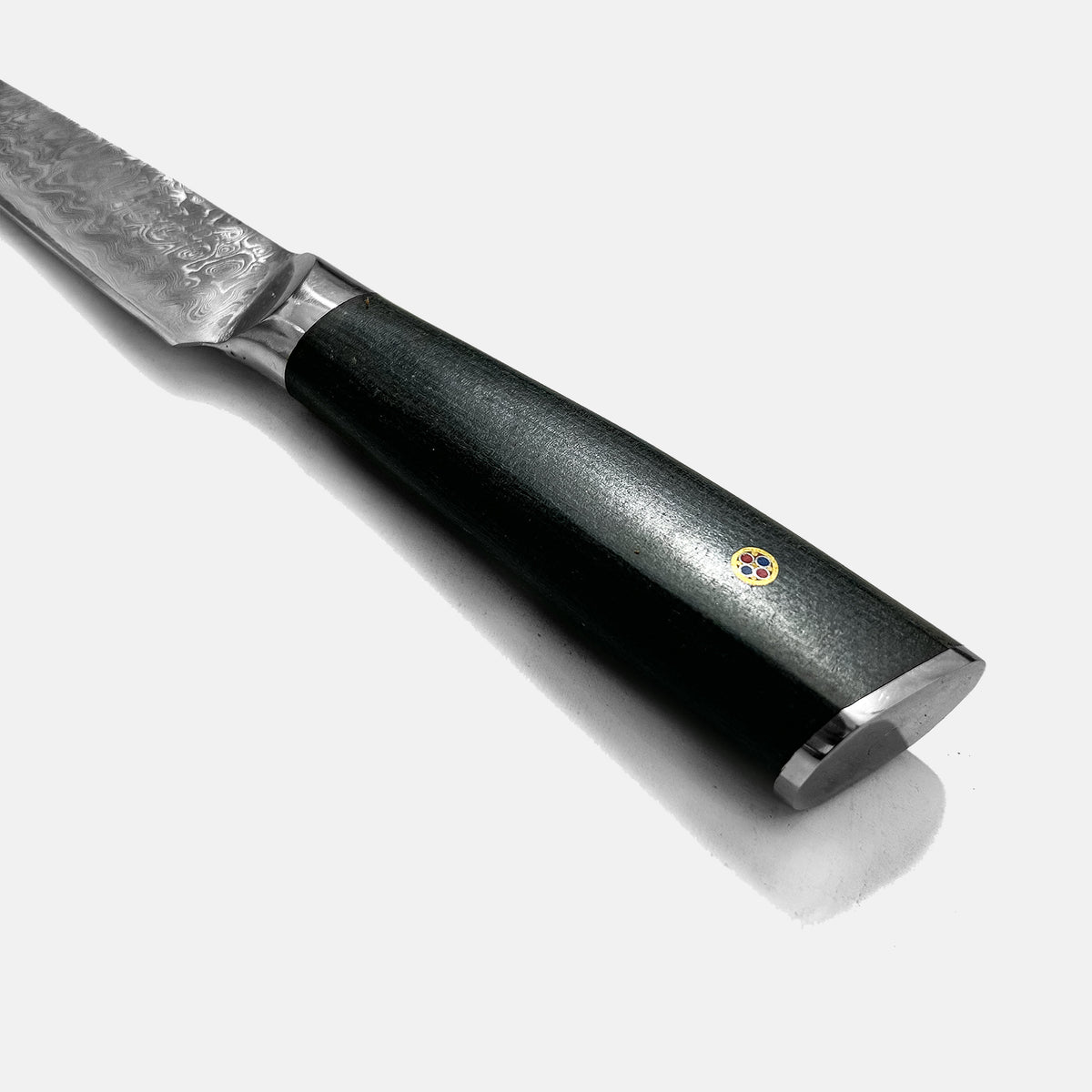
A paring knife is a small knife, usually with a 3 to 4 inch blade, used for precise jobs that a chef knife is too big for: peeling, trimming, coring, hulling, deveining and cutting garnishes. Many of those jobs are done in the hand instead of on a board, which is where its short blade and sharp point come into their own.

What is a paring knife?
A paring knife is the smallest of the everyday kitchen knives. The short blade gives you close control, the narrow tip reaches into small spaces, and the light weight means you can hold the food in one hand and work on it with the other. After the chef knife, it is the knife most cooks use every day.
12 jobs a paring knife does best
- Peeling fruit and vegetables such as apples, pears, potatoes and ginger.
- Hulling strawberries: a quick twist of the tip removes the stalk and core.
- Coring apples, tomatoes and peppers.
- Deveining prawns by running the tip along the back.
- Segmenting citrus by cutting between the membranes.
- Trimming fat and small bits of sinew from meat.
- Removing seeds from chillies, peppers and melon.
- Scoring pastry, bread and the skin of meat.
- Cutting garnishes and small decorative shapes.
- Mincing small amounts of garlic or shallot.
- Checking food is cooked: the slim tip tests potatoes and cakes.
- Opening packaging neatly, without reaching for the big knife.
How to hold a paring knife
For work in the hand, hold the handle in your fingers with your thumb free, and use your thumb to brace the food. Draw the blade towards your thumb in short, controlled strokes, keeping your thumb below the line of the cut. For work on the board, hold it like a small chef knife, pinching the blade just in front of the handle.
The main paring knife shapes
- Spear point: the classic shape, with a straight edge that curves up to a central tip. The best all-rounder.
- Sheep's foot: a straight edge and a rounded spine, good for slicing and julienne on a board.
- Bird's beak (tourné): a blade that curves down like a hook. It follows round fruit and vegetables, so it is excellent for peeling and shaping. Our TitanForge 5-inch paring knife has this curved profile.
What size paring knife is best?
A 3.5 inch (9 cm) blade is the standard and suits most hands for in-hand work. Around 4.5 to 5 inches is useful if you also want to cut small items on the board. Our Damascus paring knives range from 3.5 to 5 inches.
Paring knife vs utility knife
| Paring knife | Utility knife | |
|---|---|---|
| Blade length | 3 to 4 in | 4 to 6 in |
| Best for | Work in the hand: peeling, coring, trimming | Small jobs on the board: tomatoes, sandwiches, cheese |
| Control | Highest | Good |
If you only buy one small knife, choose a paring knife. Add a utility knife later if you often cut small foods on a board.
What not to use a paring knife for
The short, thin blade is not made for hard squash, bones, frozen food or large vegetables. Twisting the tip in hard food can snap it. Use a chef knife or a cleaver for those.
Care
Wash and dry it by hand straight after use, keep it in a block or on a magnetic strip so the tip is protected, and sharpen it on a whetstone the same way as a larger knife; it only needs a few strokes. See how to sharpen a knife with a whetstone.
Frequently asked questions
What is the difference between a paring knife and a chef knife?
A chef knife is a large, all-purpose knife for work on the board. A paring knife is small and precise, for detail work and jobs done in the hand.
Do I need a paring knife?
Yes for most kitchens. With a chef knife and a bread knife it makes up the three knives that cover almost all home cooking. See our guide to the types of kitchen knives.
Can you cut meat with a paring knife?
Small pieces, yes: trimming fat or cutting a chicken breast into strips. For larger cuts use a chef knife or a boning knife.
Hand-forged in 224 layers
Find the right knife for the job
Every Blade Craft knife is forged by hand from Damascus steel, finished with a full-tang handle and covered by our lifetime guarantee.